
Clenergy expands Latin America tracker business after first 2 MW project
Chinese mounting specialist completed its first tracker installation in Honduras in 2026 and targets distributor growth for 2027.
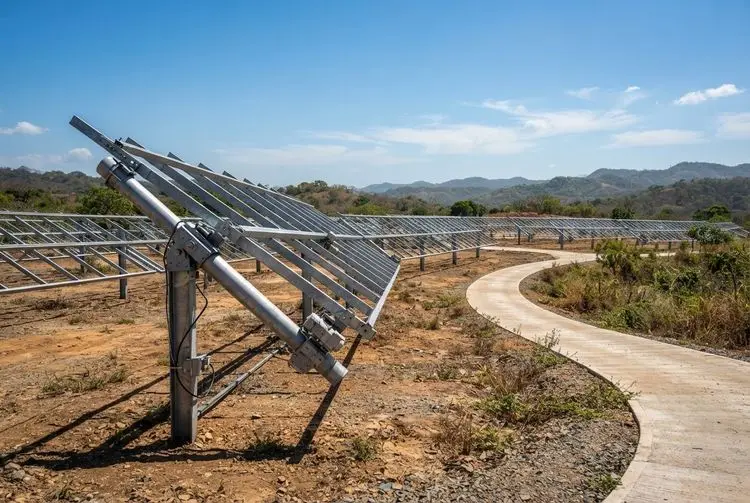
Chinese solar mounting and tracking specialist Clenergy has completed its first Latin American tracker project — a 2 MW installation in Honduras — and is laying groundwork for a broader regional push in 2027, the company told Energía Estratégica.
The project marks Clenergy's entry into the Latin American tracker market, a segment the company is now prioritising alongside its established fixed-structure business. Clenergy, which draws on over 50 GW of global solar experience, began strengthening its Latin American presence at the end of 2025.
First tracker project and regional footprint
The 2 MW tracker installation in Honduras faced technical hurdles typical of entering a new market. "It was a challenge because it was the first time we were selling trackers in Latin America, due to all the communication issues," said Emanoele Tormem, Clenergy's representative.
Clenergy supplies mounting solutions in Guatemala and Nicaragua and maintains a commercial presence in Brazil, Mexico and Argentina. The company has added sales staff in Brazil, Argentina and Mexico, and bases pre-sales and after-sales engineers in the region to support local clients.
"Manufacturing has always been in China, and due to the time difference, coordination can sometimes be difficult. That's why we invested in staff in Latin America, to offer better service in Spanish and Portuguese," Tormem said.
Clenergy sends engineers to oversee material receipt and train assembly teams on the ground. Standard production takes 5-6 weeks, with shipping adding another 5-6 weeks. For urgent orders, manufacturing can be reduced to 3 weeks, though logistical delays beyond the manufacturer's control remain a risk.
Honduras market context
Honduras had 570.9 MW of photovoltaic capacity installed as of February 2026, according to the Honduran Renewable Energy Association (AHER). The country's total installed electrical power stood at 3,480.4 MW, with wind power contributing 238.1 MW. Industry observers note that Honduras needs stronger regulatory and investment conditions to accelerate renewable deployment.
Colombia: new distribution and rooftop alliance
Clenergy has identified Colombia as a growth market and is pursuing new distribution opportunities there. The company formed an alliance with INGE SOLAR for rooftop solutions in Colombia and is actively seeking partners for ground-mounted structures.
Colombia's solar and wind capacity reached 5,320.48 MW by November 2, 2026, according to the Mining and Energy Planning Unit (UPME) and grid operator XM. In the third quarter alone, 39 solar projects connected to the grid, contributing to 698.2 MW of new power plants. By May 2026, Colombia had 24,447 registered solar systems, with 15,000 systems installed between 2024 and 2025.
Mini solar farms and commercial and industrial installations are growing in Colombia, Tormem noted. Developers frequently ask about fixing types, foundations and post configurations. Clenergy offers circular posts, L-shaped profiles, and drilling or concrete foundations to meet varied site conditions.
"Without alliances, no manufacturer can achieve great visibility or develop its full potential in each country," Tormem said.
Product portfolio for Latin America
Clenergy has introduced several mounting products suited to the region's diverse rooftop and ground-mount requirements. The AERI-N system targets conventional rooftop installations, while the ACENT system is designed for flat roofs using a ballasted approach that avoids roof perforations. The Solar Tree Pod supports structures on concrete bases, and the Solar Terrace MAC is a fixed solution with C5 corrosion resistance for demanding environments.
Brazil, Mexico and Argentina
Brazil remains Latin America's largest solar market. By September 2026, the country had 77.3 GW of installed solar capacity, according to the Brazilian Photovoltaic Solar Energy Association (ABSOLAR). Distributed generation systems numbered 4.6 million. Brazil has a consolidated network of manufacturers, distributors and installers, though Clenergy has not specified contracts or supply volumes in the country.
In Mexico, distributed generation added 447.47 MW in the first half of 2026, bringing cumulative distributed generation to 5,675.47 MW, according to the National Energy Commission. Solar accounts for 99.54% of Mexico's distributed generation capacity.
Argentina had 3,015 MW of installed solar capacity as of September 2026, with renewables meeting 22.7% of monthly electricity demand, according to CAMMESA data.
2027 priorities
Clenergy has set three priorities for 2027: expanding its distributor network across Latin America, adding technical and commercial staff, and building benchmark projects that demonstrate its tracker and mounting capabilities in the region.
The company has not communicated specific targets for installed power or revenue in Latin America. Its focus remains on establishing a service and support infrastructure that can compete with established local and international suppliers.
Guatemala's solar market is also expanding rapidly. The number of solar plants in the country grew from 17 at the end of 2024 to 21 by April 2025, while effective solar capacity rose from 127 MW to 196.4 MW over the same period, according to the Ministry of Energy and Mines.
Nicaragua, where Clenergy already supplies, projected 838.56 MW of renewable generation capacity for 2026. Renewables already account for 83% of the country's electricity generation in an average month.