
Ireland's RESS 6 Awards 1,367 MW Solar in Record Renewable Auction
Solar dominates Ireland's RESS 6 auction with 1,367 MW, pushing total capacity 43.9% above RESS 5.
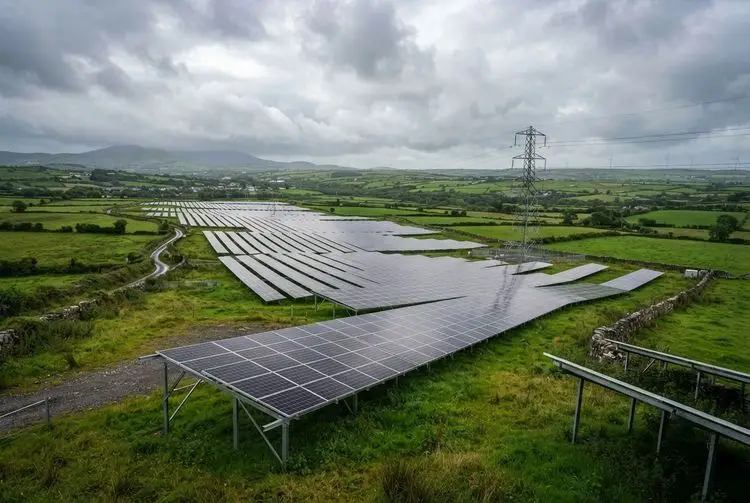
Ireland's sixth Renewable Electricity Support Scheme (RESS 6) auction has provisionally secured 1,555 MW of onshore renewable capacity, with solar photovoltaic projects accounting for 1,367 MW across 22 projects, according to provisional results released by grid operator EirGrid. Onshore wind contributed 188 MW to the total.
The auction represents a 43.9% increase in procured capacity compared to RESS 5's 1,079 MW. Solar allocations rose 58.9% from the 860.38 MW secured in the previous round. In energy terms, RESS 6 provisionally secured over 1,800 GWh annually — enough to power more than 450,000 homes. It is the largest auction of the scheme to date in terms of successful volumes and capacities since RESS 2.
Minister for Climate, Energy and the Environment Darragh O'Brien announced the provisional results. "I am delighted to confirm the success of the RESS 6 auction," O'Brien said. "Our energy system is changing at pace. We have achieved an increase of over 2.2 GW of installed renewable electricity capacity, and an over doubling of grid-scale solar capacity, since this government took office. RESS plays a pivotal role in delivering this progress, providing the support and certainty needed to bring projects forward."
The results underscore solar's position as Ireland's fastest-growing electricity generation technology. Ireland now has almost 3.5 GW of total installed solar capacity, including both embedded capacity at household and small business level and larger grid-scale capacity. The country is on track to achieve its 8 GW solar target.
Pricing and Auction Structure
The average weighted price of successful offers came in at €102.42/MWh for solar and €99.35/MWh for wind. For solar, this equates to approximately £85.74/MWh.
For the first time, the RESS auction separated onshore wind and solar into distinct pots. Additionally, 15% of the assessment weighting was based on EU Net-Zero Industry Act (NZIA) criteria, introducing sustainability, resilience and innovation requirements for project qualification.
Of the 46 projects submitted to RESS 6, 36 solar projects and 10 onshore wind projects qualified. Six solar projects did not qualify, and six solar projects withdrew from the auction. Around a gigawatt of solar energy was offered unsuccessfully.
Successful projects include the Kilrue Solar park and its Extension, which offered 195 MW and 175 MW respectively. Harmony Solar's Dromilvuan Solar project offered 100 MW, and the Rathdrinagh Solar project offered 120 MW.
Support Mechanism and Wind Concerns
The RESS scheme provides guaranteed minimum payments to renewable generators when market prices are low, funded through the Public Service Obligation (PSO) levy collected by Irish electricity companies. When the market reference price exceeds the strike price submitted by the generator, the generator returns the difference to the PSO. As with previous RESS auctions, support is only provided when market prices are low, and generators must repay money to electricity customers when market prices are high.
While the auction results were broadly positive, Minister O'Brien noted that onshore wind projects were being outpaced by solar. "We are not seeing enough onshore wind farms entering these auctions in recent years," he said, adding that "hybrid wind/solar and storage assets will also be increasingly important for the power system in Ireland. We need to facilitate full integration of hybrid renewables and storage projects into the market."
Michael Kelly, EirGrid's chief operations officer, highlighted the auction's broader evaluation criteria. "RESS 6 looks beyond price to also consider resilience and how projects support the wider electricity system," Kelly said. "That broader approach is important as we work to connect more renewable generation and build a cleaner, more secure and affordable electricity supply for Ireland."
Outlook
Final results are due on 2 December 2026. The provisional figures position RESS 6 as a significant milestone in Ireland's renewable energy transition. The auction's scale, the continued dominance of solar, and the introduction of NZIA criteria signal an evolving policy framework that increasingly weighs non-price factors such as sustainability, resilience and system support.
At the same time, the relatively modest onshore wind allocation — 188 MW — and the large volume of unsuccessful solar offers, around a gigawatt, suggest ongoing challenges in project qualification and grid integration. These are issues policymakers and developers will need to address as Ireland pursues its broader renewable energy targets.