
Minnesota community solar program delivers savings to thousands of households
Enterprise Energy powers 10,000 homes through the Melissa Hortman program and targets 30,000 within a year.
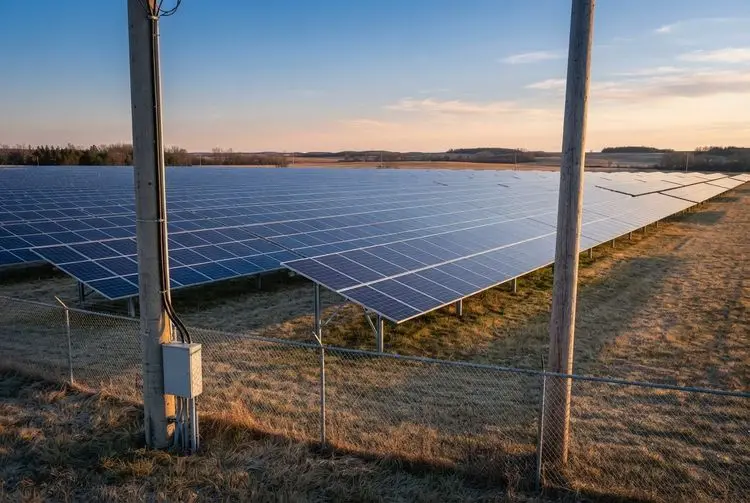
Minnesota's community solar program, named after State Representative Melissa Hortman, is delivering measurable savings to households across the state. Created in 2013 and subsequently updated, the program has grown into one of the largest community solar markets in the US, with over 800 MW of active capacity.
Enterprise Energy, a Minneapolis-based community solar developer, currently powers approximately 10,000 households through the program. The company projects that number will reach 30,000 within the next year.
Eric Pasi, CEO of Enterprise Energy, said the program has fundamentally changed the economics of solar access for Minnesota families.
"Solar energy isn't an expensive luxury anymore. It's now one of the most affordable sources of new electricity generation in the country. Thanks to Minnesota's modern energy policy, accessing those lower costs doesn't require thousands of dollars in rooftop panels," Pasi said.
The program serves Xcel Energy customers exclusively. Subscribers receive solar credits on their Xcel bills through a consolidated billing system. There are no setup fees, credit checks, or hidden costs, and the program guarantees savings for income-qualified households. Joining takes minutes and costs nothing to start, with immediate savings guaranteed on monthly bills.
Growth and recognition
Enterprise Energy was named the fastest-growing company in Minnesota on the Inc.com 2026 5000 list and ranked fourth nationally within the energy sector category. The company offsets close to 100 million pounds of CO2 annually through its portfolio of community solar gardens.
Pasi emphasized the company's local roots and mission.
"We are a locally owned company, based in Minneapolis, created to give local families direct relief from rising utility bills," he said.
The broader context for the program's growth is a nationwide trend of rising utility bills. Utilities across the US are funding grid overhauls through rate hikes, driven by surging demand from electric vehicles, data centers, and severe weather events. Aging power infrastructure is reaching its limits, and families are feeling the squeeze from rising grocery and gas prices alongside higher electricity costs.
Community solar offers an alternative. Local solar farms generate affordable grid electricity, and subscribers benefit without installing panels on their own roofs. Enterprise Energy plants pollinator-friendly seed mixes at all its project sites, and some gardens are used for sheep grazing. Low-growing crops are planted below panels at certain locations. The company also sources American-made equipment for its installations.
A scalable model
Enterprise Energy is expanding into Illinois, which operates a similar state community solar program. Nationwide, 44 states and localities now have community solar programs in place, reflecting growing interest in distributed solar generation as a tool for both cost relief and grid resilience.
Pasi sees the Minnesota model as a template for other states.
"We are providing a scalable blueprint for how the rest of the country can expand access to affordable electricity," he said.
For solar industry professionals and investors, the Minnesota program demonstrates how well-designed state policy can drive rapid subscriber growth and developer expansion. The combination of consolidated utility billing, no upfront costs, and guaranteed savings for low-income households removes many of the traditional barriers to solar adoption.
The program also highlights the role of community solar in grid modernization. By generating electricity close to where it is consumed, local solar farms reduce transmission losses and can alleviate strain on aging infrastructure. As demand from EVs and data centers continues to climb, distributed generation assets like community solar gardens will become increasingly valuable for grid operators.
Enterprise Energy's expansion into Illinois suggests the model is replicable. With 44 states and localities now running community solar programs, developers with proven operational track records are well positioned to enter new markets. The company's ranking on the Inc. 5000 list signals strong revenue growth and execution capability.
For installers and engaged homeowners, the key takeaway is that community solar is no longer a niche product. In Minnesota, it has become a mainstream option for households seeking immediate utility bill savings without capital outlay. The program's structure — no credit checks, no setup fees, consolidated billing — lowers the barrier to entry to near zero.
As utility rate hikes continue across the US, community solar programs like Minnesota's are likely to attract increasing attention from policymakers and regulators looking for ways to deliver affordable electricity to ratepayers while building a cleaner, stronger local grid.