
UK Budget Boosts Home Solar Loans but Restores VAT on Installations
New loans and social housing funding for solar offset by VAT reinstatement and Warm Homes Plan cuts.
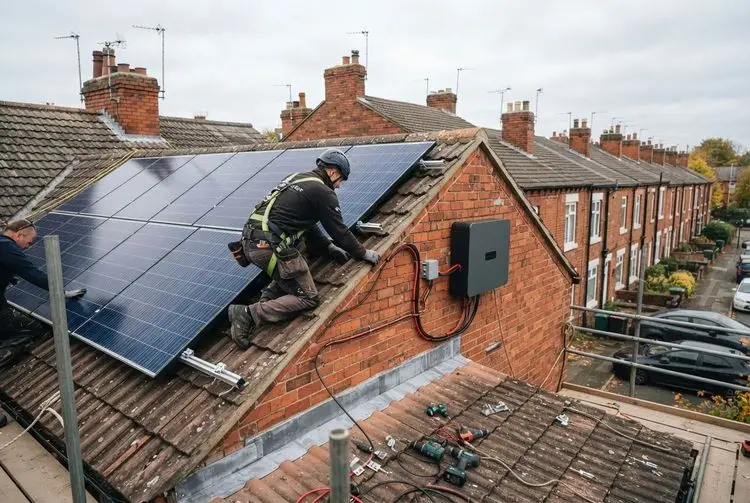
The UK government's first budget under Chancellor John Healey, delivered on 28 October, has drawn a mixed response from the solar and battery storage industry. New support measures for household energy upgrades are tempered by the reinstatement of VAT on energy-saving materials and cuts to the flagship Warm Homes Plan.
New Loan Scheme and Social Housing Funding
The budget introduced an immediate extra £100 million for solar and battery installations on social housing, aimed at addressing fuel poverty. An additional £335 million in investment will be delivered under the Warm Homes Plan next year, even as the overall scheme faces reductions.
The Warm Homes Loan Scheme, announced ahead of the budget, offers zero or low-interest loans for energy upgrades including solar panels and battery storage. Loans are capped at £15,000 for solar and £15,000 for battery storage, with interest rates cut by up to 5%. The scheme will be delivered via partners including Sunsave and E.ON (through Homeserve), with all installations conducted by MCS-certified installers to ensure consumer confidence.
According to the government, a home with solar panels, batteries, and a heat pump could save £550 per year, or up to £800 on a time-of-use tariff. Solar Energy UK Chief Executive Chris Hewett praised the loan scheme, stating: "With the Warm Homes Loan Scheme now in place, more homes can go solar next year than ever before, taking control of their energy and insulating themselves from high energy bills."
Hewett added that the industry expects to break its annual record for smaller-scale solar installations within weeks, with 300,000 systems projected for this year and further growth anticipated in 2027.
VAT Reinstatement Draws Criticism
However, the budget confirmed that the zero VAT rate on energy-saving materials—including solar panels, home batteries, heat pumps, and insulation—will not be extended. From 1 April 2027, qualifying installations will return to the reduced VAT rate of 5%. This change will add approximately £500 to a typical £10,000 solar and battery system.
Solar Energy UK strongly criticized this measure. Hewett called it a "perverse incentive," noting: "With domestic electricity bills now zero-rated until July next year, saving energy will be taxed more heavily than consuming it." The trade body urged the government to reverse course, arguing that the VAT exemption's removal is inconsistent with the goal of increasing household adoption of solar and batteries.
With the VAT deadline fixed, installers can expect a rush of orders before April 2027 and a slower market afterwards. The industry remains confident that the loan scheme will drive further growth, but the removal of the VAT exemption casts a shadow over the government's ambition to support household clean energy at scale.
Warm Homes Plan Cuts
The Warm Homes Plan, originally intended to provide £15 billion in grants and loans by the end of the decade for up to five million households, has been cut by £1 billion to help cover defence spending. Funding for the Boiler Upgrade Scheme is held at £400 million in 2027–28, approximately £800 million less over three years than previously planned. Analysts cited by Carbon Brief estimate this could mean around 100,000 fewer heat pumps installed.
Further reductions are anticipated. A new £4.7 billion "your first home" scheme is partly funded with money previously earmarked for energy loans, potentially shrinking the Warm Homes Plan to as little as £9 billion. Climate groups, including Nesta, Electrify Britain, and E3G, criticized the cuts, with E3G noting that households and businesses need certainty before investing.
Utility-Scale Solar and CfD Changes
For utility-scale solar, the budget outlined changes to the Contracts for Difference (CfD) scheme. The eighth round (AR8) will be open only to projects that can connect to the grid and start generating at the earliest opportunity. While this should not immediately impede the sector given the wealth of projects with planning consent, Solar Energy UK's Director of Policy and Delivery, Gemma Grimes, cautioned: "The devil will be in the detail of this scheme. While it reflects understandable pressure to lower bills, it could ultimately prove damaging to that objective by harming confidence in investing in cheap, clean, homegrown power."
Legacy solar farms supported by Renewable Obligation Certificates will move to a fixed-price scheme known as Wholesale CfDs, with an exemption from the Energy Generator Levy windfall tax extended past 2028. A consultation on the proposal has opened. The plan echoes a voluntary offer made by Solar Energy UK and its largest members in 2022 during the energy price crisis.
Energy Wealth Fund and Great British Energy
The budget established an Energy Wealth Fund as part of the National Wealth Fund, with £2 billion in funding and further funding linked to North Sea oil and gas revenues. The fund will invest in renewable and low-carbon energy infrastructure. However, Great British Energy's funding over the spending review period has been reduced by £200 million to £8.3 billion.
Broader Energy Policy Context
Chancellor Healey prioritized lower bills, introducing a £100 council tax rebate for bands A to D in England, scrapping the gas standing charge, and extending the VAT cut on household electricity bills until July 2027. No new policy costs will be added to bills until a cost-control framework is in place in 2027. Healey told parliament the government remains "unshakably committed to net-zero."
Climate groups largely criticized the budget's overall direction. E3G noted that the budget fell short on most of its four tests: there was no general shift of levies from electricity bills into taxation, the government welcomed approval of the Jackdaw gas field, and budget forecasts assume the Rosebank oil field will go ahead. The Conservatives and Reform UK argue that net-zero targets should be dropped altogether to cut bills.
Industry Outlook
Despite the frustrations, Solar Energy UK maintains a broadly positive view. Hewett commented: "These and many aspects of the Budget are most welcome and it is clear that the Chancellor understands how solar and battery storage is contributing to delivering cheaper power. But what we and our members really needed to see was all levies being struck from electricity bills."
The industry now faces a mixed outlook. The loan scheme is expected to drive further growth, but the removal of the VAT exemption and cuts to the Warm Homes Plan temper the government's ambition to support household clean energy at scale. With 300,000 smaller-scale solar systems projected for this year and further growth anticipated in 2027, the sector remains confident—but wary of the policy headwinds ahead.